Jonathan Iker Zamarripa

This dossier presents the issue’s scenes, concept screens, and diagrams. The complete text is in the original issue on LinkedIn (opens in a new tab).

Cinematic Learning Systems · Audit · Issue 07

Designed for Dana. Wrong for Marcus.

An audit of last week’s worked example, the production artifacts behind the fix, and the pilot designed to test it.

Dana and Marcus are composite characters.

Composite scenario
Dana, Marcus, Sarah, and Benjamin are composite characters.
AI-generated imagery
The photographs are AI-generated editorial images of these fictional characters.
Concept mockups
The redesigned screens are concepts, not a shipped product.
Design pseudocode
The state engine describes intended logic, not production code.
First-pass heuristic
The evaluation rubric is preliminary; a human double-codes diagnosis.
Designed, not run
Field Log 001 has no results yet.
Proposal
Counterpart design is a proposal, not a validated intervention [Hypothesis].
Proposed revision
CLPF v1.1 material is not released.

Chapter 01

The Human Problem
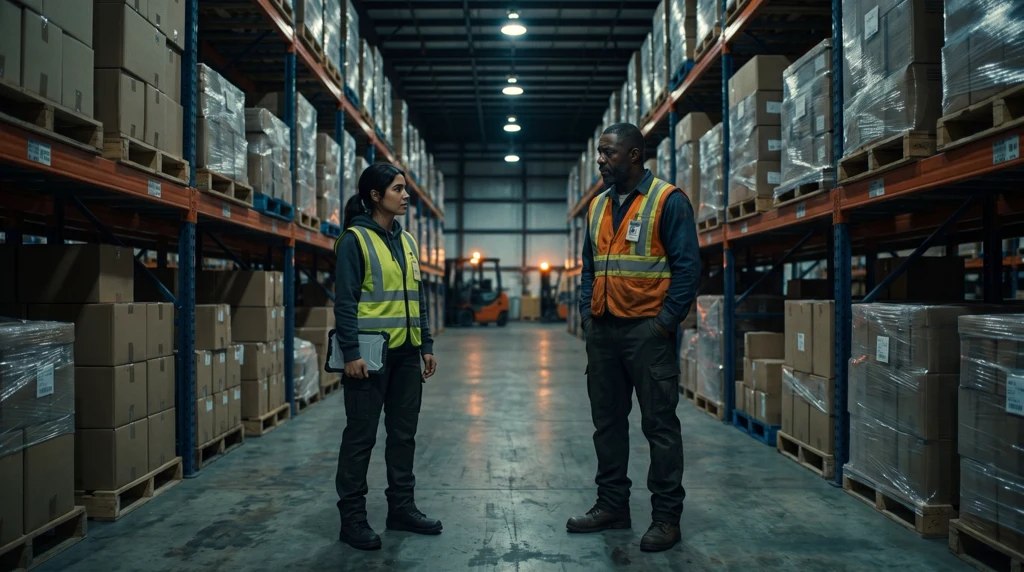
Night shift in a warehouse aisle lined with tall pallet racks. Dana, in a yellow safety vest and holding a tablet, faces Marcus, in an orange safety vest, a few feet away.
Fig. 1 AI-generated editorial image · Composite characters Night shift, Aisle 04. Open full size (Figure 1, opens in a new tab)
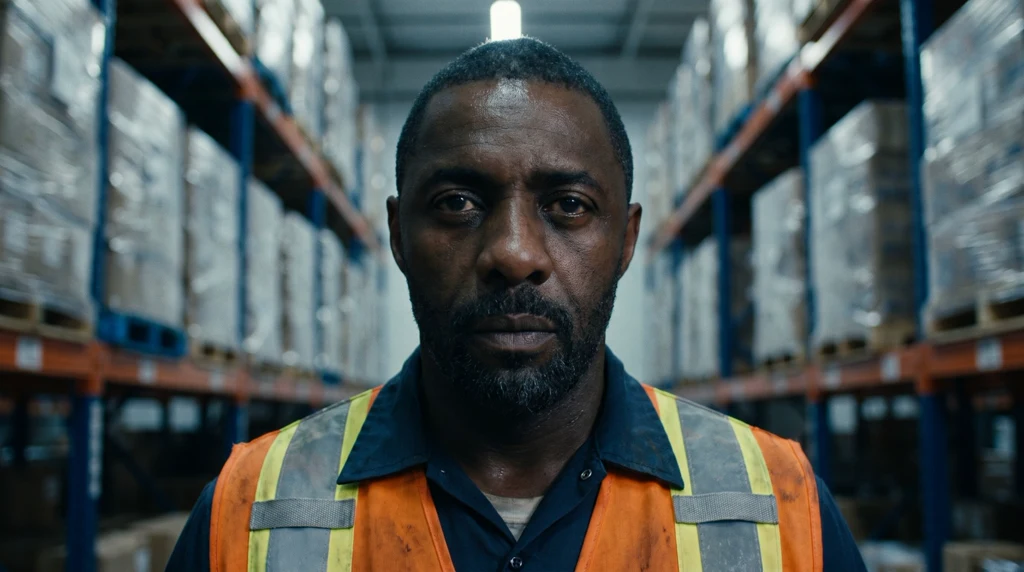
Marcus, straight-on portrait between warehouse racks, in an orange safety vest; his expression is guarded and unreadable.

The surface read

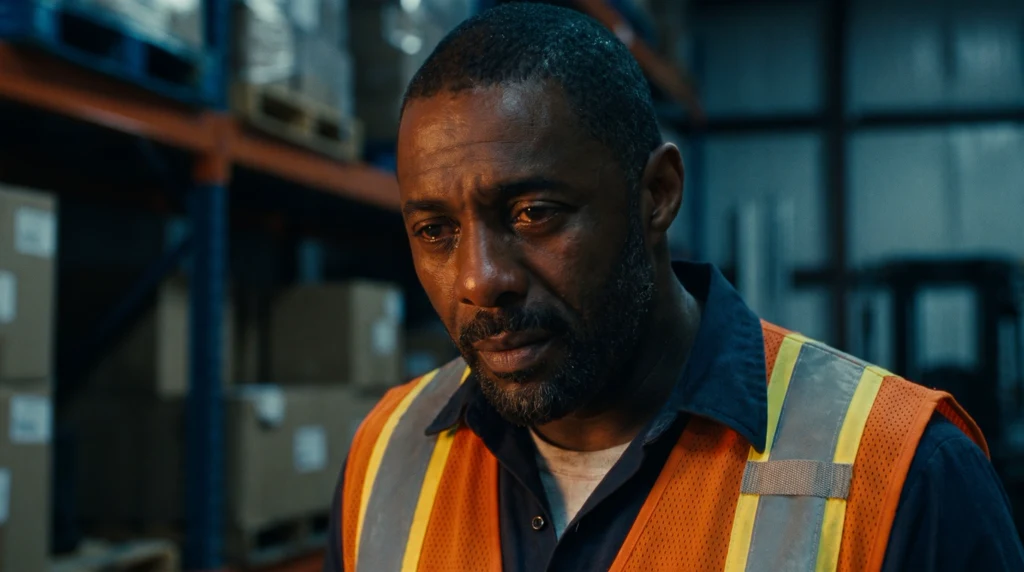
Marcus in close-up, eyes lowered and wet, his expression strained.

What the surface doesn’t show

Fig. 2 AI-generated editorial image · Composite character The diagnostic comparison. Open full size (Figure 2, opens in a new tab) Second image (Figure 2, opens in a new tab)

Chapter 02

What the Original Design Missed

Chapter 03

Redesigning the Experience
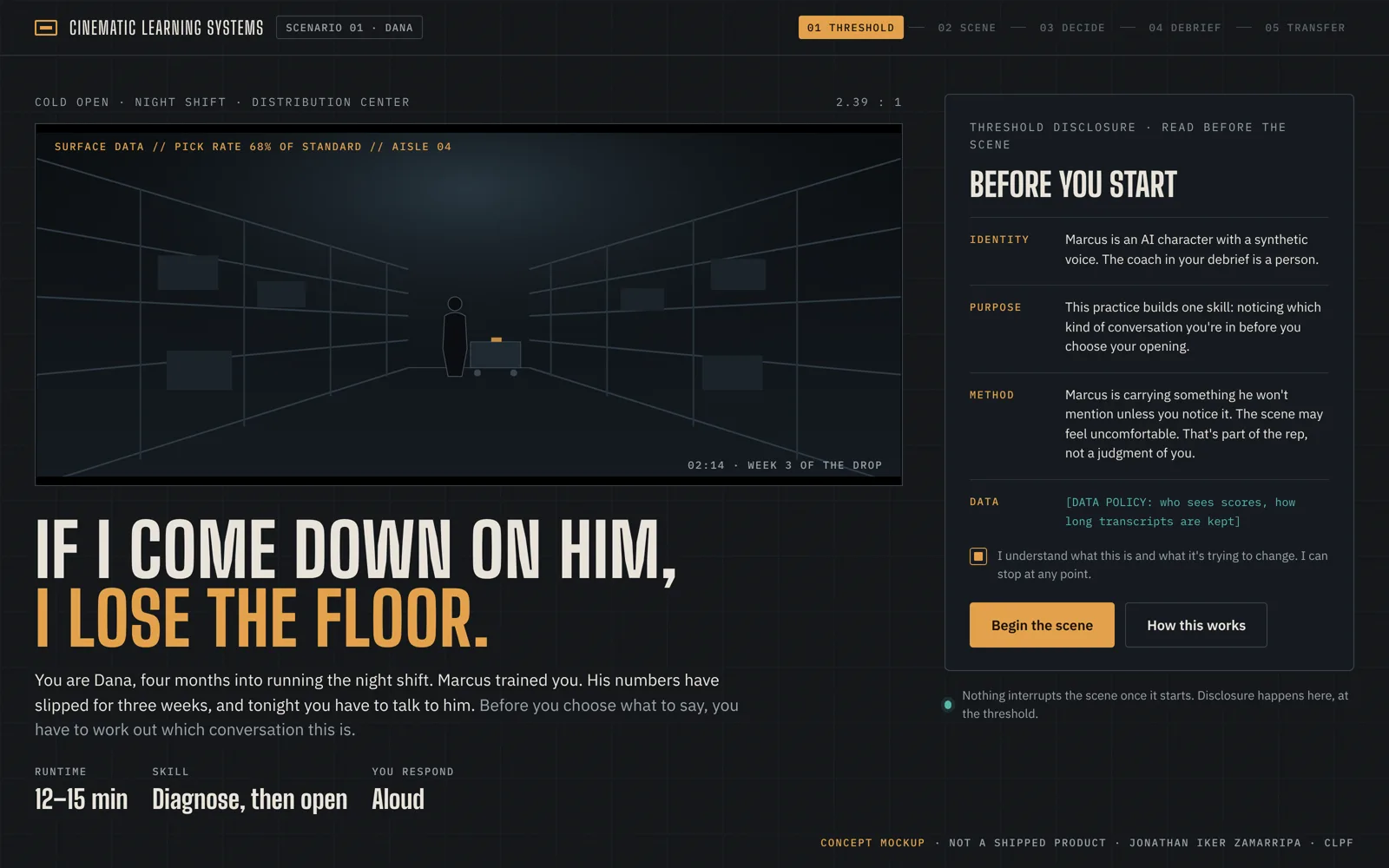
Concept screen, threshold disclosure. Left: a dark cold-open frame of a lone worker in a warehouse aisle, labeled “Surface data: pick rate 68% of standard, Aisle 04,” above the line “If I come down on him, I lose the floor.” Right: a panel headed “Before you start” listing Identity, Purpose, Method and Data, a consent checkbox, and a “Begin the scene” button.
  1. Identity. Marcus is an AI character with a synthetic voice; the debrief coach is a person.
  2. Purpose. One skill: noticing which kind of conversation you’re in before choosing an opening.
  3. Method. Marcus is carrying something he won’t mention unless the learner notices it.
  4. Data. Who sees scores and how long transcripts are kept — to be written.
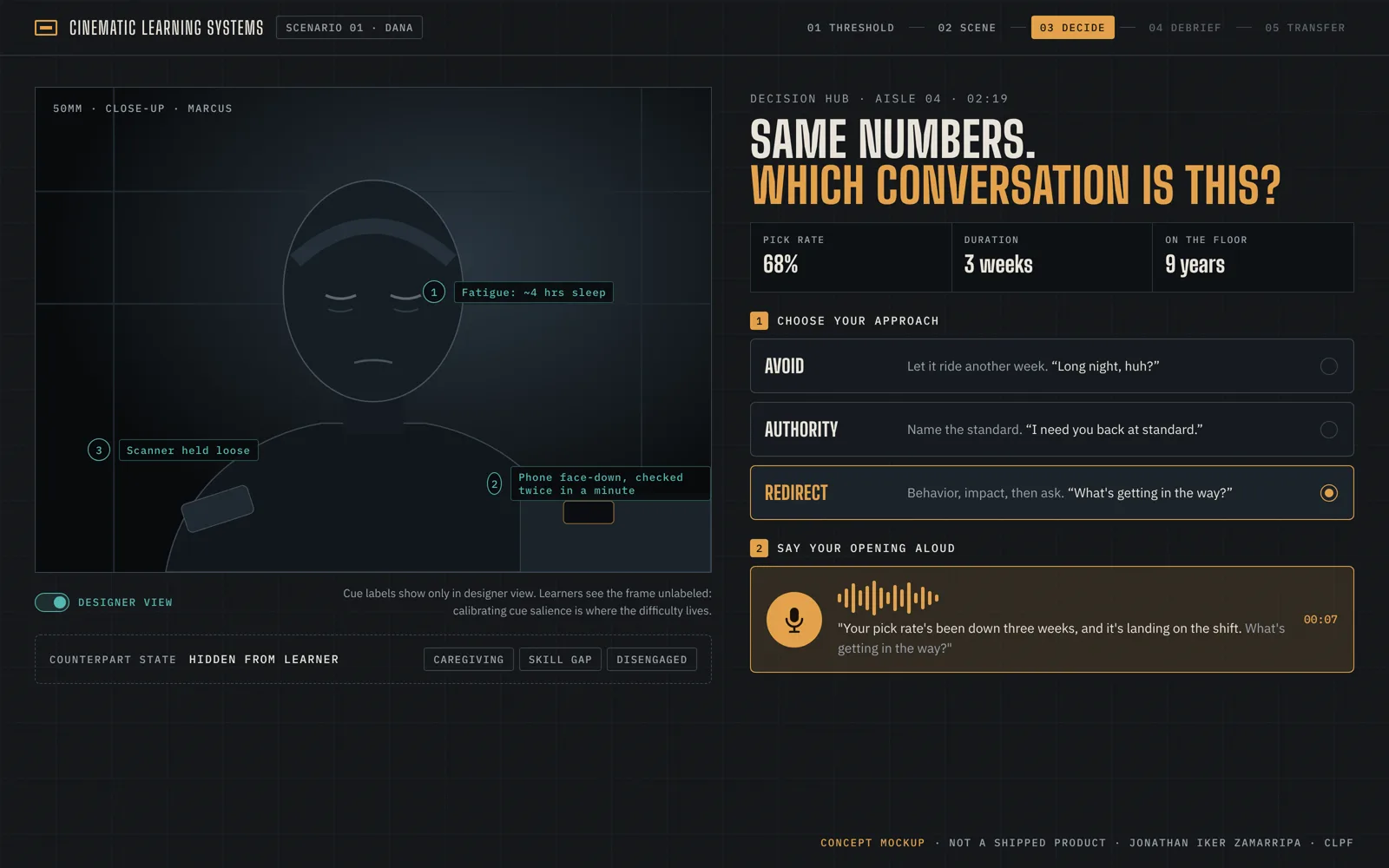
Fig. 3 Concept mockup The threshold. Before the scene starts, the learner reads what the experience is and what it is trying to change, then consents. Nothing interrupts the scene once it begins. The four disclosure layers come from a later proposal, not from the original Issue 07 text. The data-policy line is still a placeholder in this mockup. Open full size (Figure 3, opens in a new tab)
Concept screen, decision hub. Left: a stylized close-up of Marcus with three numbered cue labels — fatigue, a phone face-down, a loosely held scanner — and a bar showing the counterpart state hidden from the learner. Right: the heading “Same numbers. Which conversation is this?”, three metrics, three approaches (Avoid, Authority, Redirect) and a spoken opening.
  1. Fatigue: about four hours’ sleep.
  2. Phone face-down, checked twice in a minute.
  3. Scanner held loose.
  4. Counterpart state — caregiving, skill gap, or disengaged — is hidden from the learner.

Fig. 4 Concept mockup The decision hub. A 50mm evidence shot, three approaches, and an opening spoken aloud. Cue labels appear only in designer view; learners see the frame unlabeled. Open full size (Figure 4, opens in a new tab)
Benjamin, a peer coach in a worn work jacket and yellow safety vest, sits at a breakroom table; forklifts move on the warehouse floor through the window behind him.
Fig. 5 AI-generated editorial image · Composite character Benjamin, the scenario’s peer coach — a fictional human character, shown in an AI-generated image. Open full size (Figure 5, opens in a new tab)
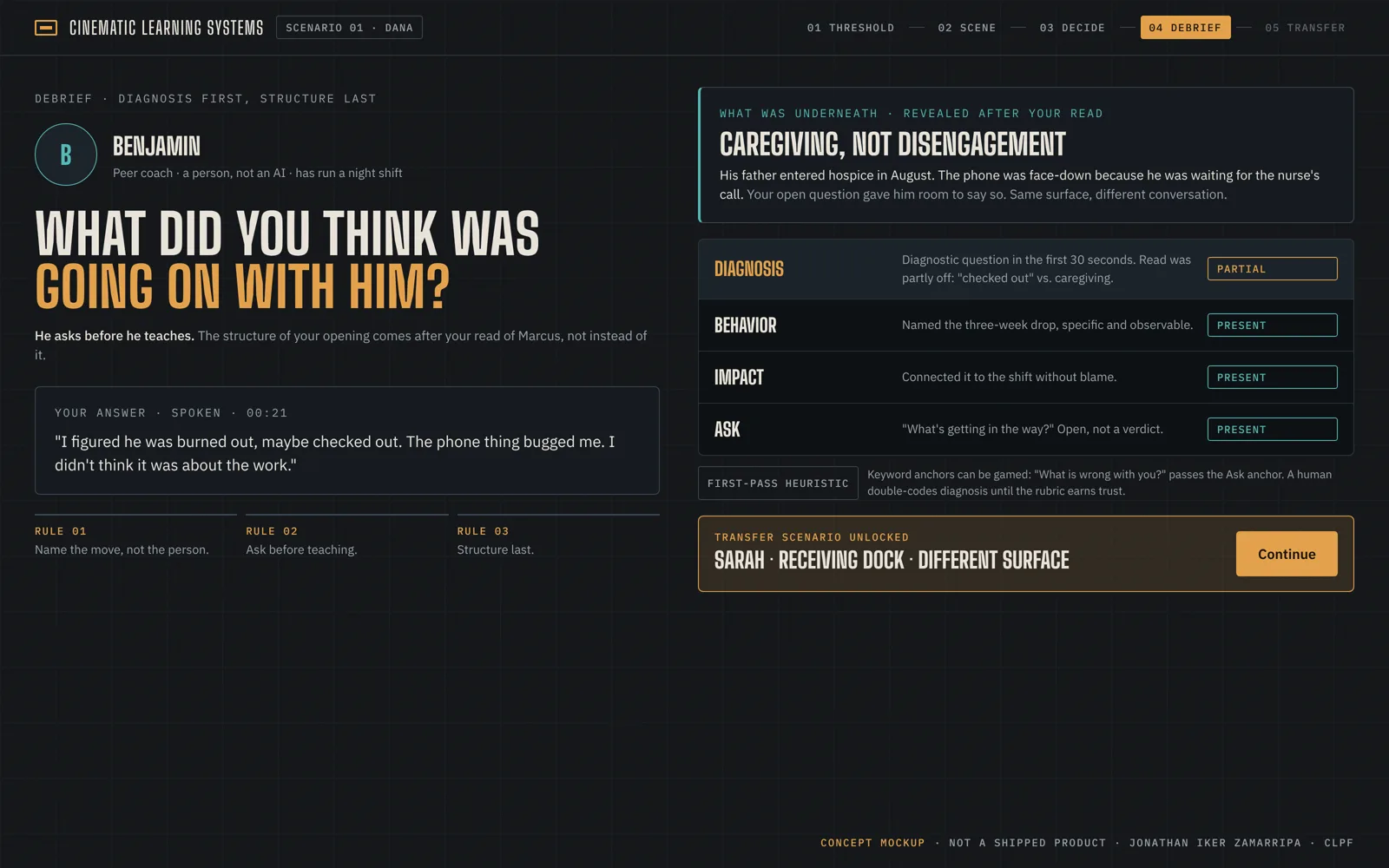
Concept screen, debrief. Left: Benjamin, a peer coach, asks “What did you think was going on with him?” above the learner’s spoken answer and three rules. Right: the reveal “Caregiving, not disengagement,” a four-row check of diagnosis, behavior, impact and ask, a first-pass heuristic note, and a transfer scenario unlock.
  1. Diagnosis first: “What did you think was going on with him?”
  2. The reveal: caregiving, not disengagement.
  3. The check is a first-pass heuristic — keyword anchors can be gamed, so a human double-codes diagnosis.
  4. Transfer: Sarah, receiving dock — a different surface.
Fig. 6 Concept mockup The debrief. The coach asks for the learner’s read of Marcus before teaching structure; then the hidden state is revealed and a transfer scenario opens. Open full size (Figure 6, opens in a new tab)

Chapter 04

Inside the System

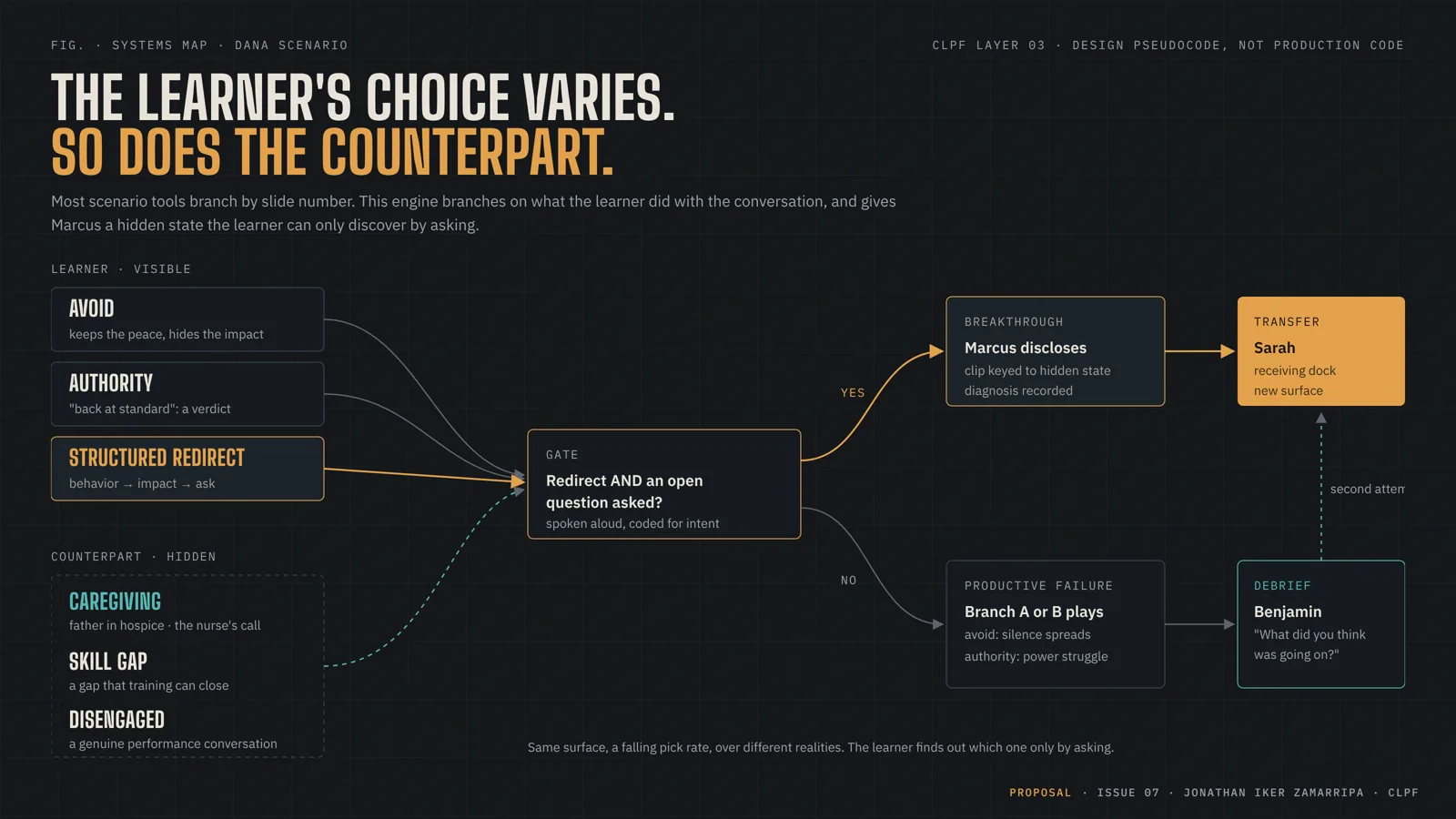
Systems map titled “The learner’s choice varies. So does the counterpart.” Three learner approaches (Avoid, Authority, Structured redirect) and a hidden counterpart state (Caregiving, Skill gap, Disengaged) feed one gate: “Redirect and an open question asked?” Yes leads to Marcus disclosing, then a transfer scenario with Sarah. No leads to productive failure, then Benjamin’s debrief and a second attempt.
Fig. 7 Design pseudocode · proposal The state engine. The learner’s approach and Marcus’s hidden state meet at one gate, spoken aloud and coded for intent. Same surface, different realities; the learner finds out which only by asking. Open full size (Figure 7, opens in a new tab)
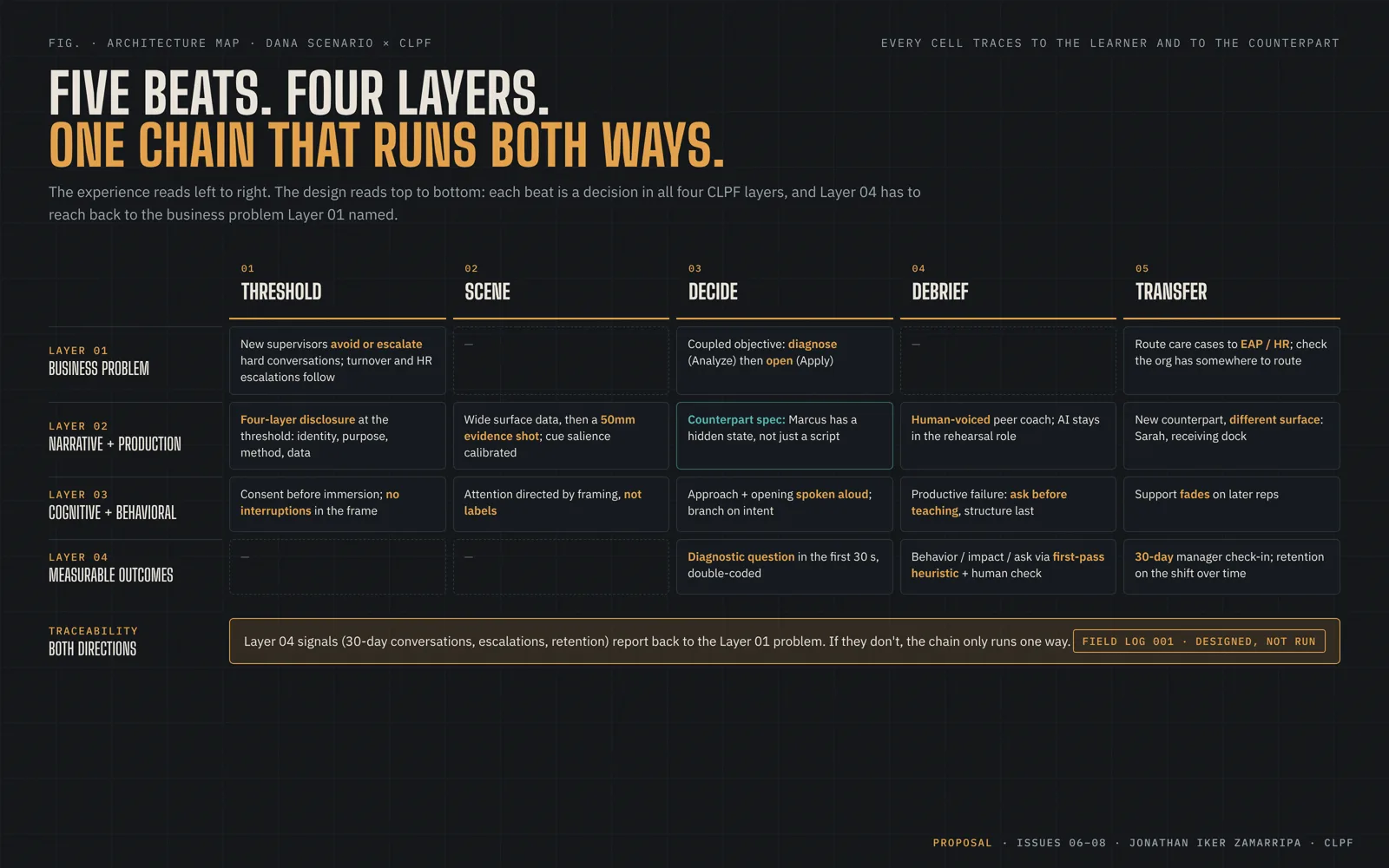
Architecture map titled “Five beats. Four layers. One chain that runs both ways.” A grid of five beats — threshold, scene, decide, debrief, transfer — across four CLPF layers: business problem, narrative and production, cognitive and behavioral, measurable outcomes. A traceability row notes that Layer 04 signals must report back to the Layer 01 problem, tagged “Field Log 001 · designed, not run.”
Fig. 8 Proposal · Issues 06–08 Traceability in both directions. Each beat is a decision in all four layers, and Layer 04 has to reach back to the business problem Layer 01 named. Open full size (Figure 8, opens in a new tab)
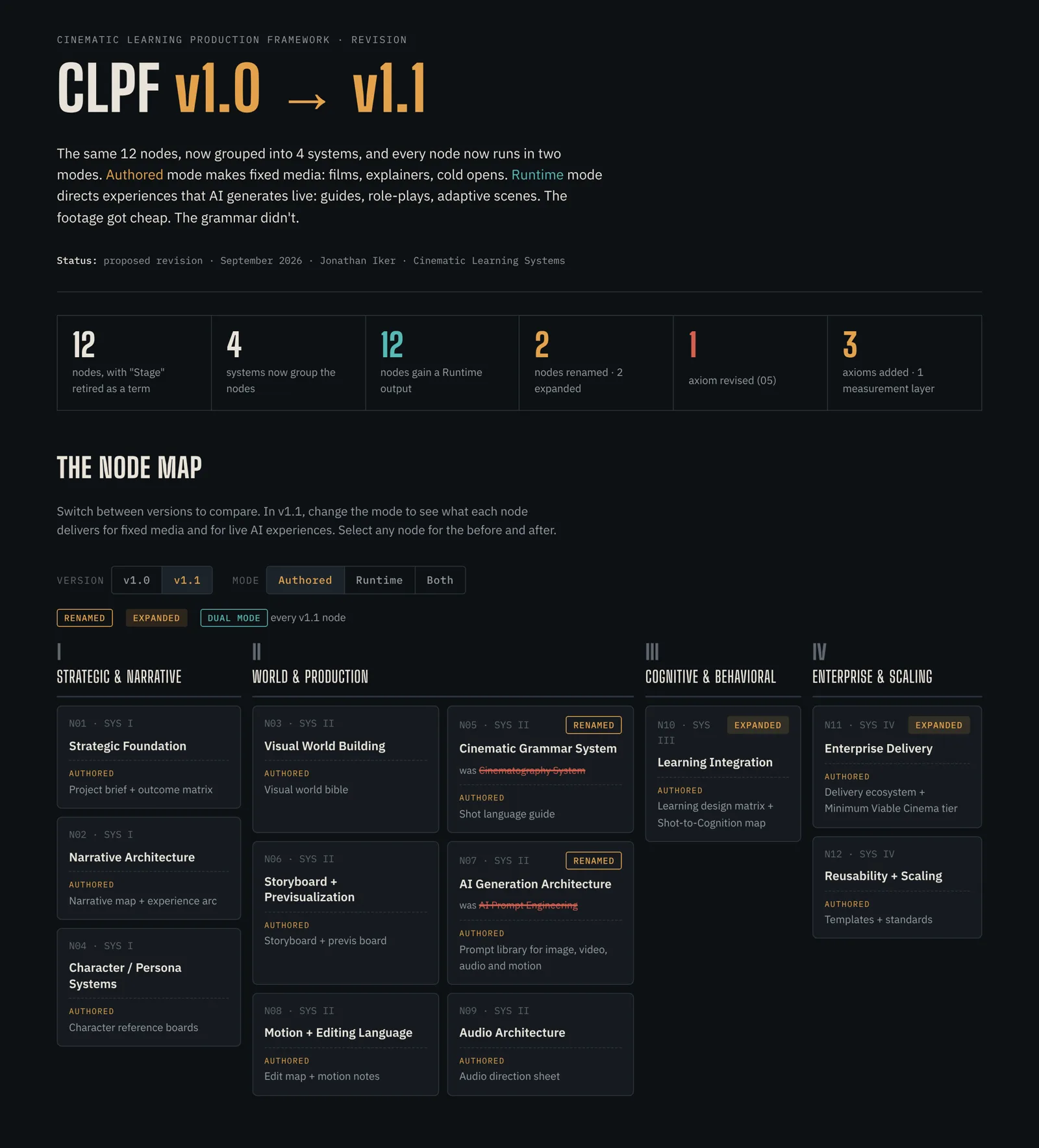
CLPF v1.0 to v1.1 comparison: twelve nodes grouped into four systems — Strategic and Narrative, World and Production, Cognitive and Behavioral, Enterprise and Scaling — with two nodes renamed, two expanded, and each node showing an authored-mode output.
Fig. 9 Proposed revision · not released CLPF v1.0 → v1.1. A static capture of a proposed comparison view; it is not part of the released framework. Open full size (Figure 9, opens in a new tab)

Chapter 05

What Remains Unproven

Proposed study · Designed, not run

Field Log 001

A pilot comparing a generic-hostility counterpart with a cue-bearing counterpart whose hidden state varies, for newly promoted shift leads. No results exist yet; null results will be published.

  • Primary measure: does the first 30 seconds include a real diagnostic question?
  • Seeking one organization with a frontline supervisor program as a pilot partner.

Chapter 06

Continue the Inquiry

Run Field Log 001 with me.

I’m looking for one organization with a frontline supervisor program to pilot the Dana scenario: newly promoted shift leads, a counterpart with a hidden state, and one measure that matters — does the first 30 seconds include a real diagnostic question? Results get published, including null results.

Start a conversation

Sources

← Cinematic Learning Systems · Corrections log